Ryan Lopopolo 如何为 Homelab 做 Harness Engineering
Original title: Harness Engineering the Homelab
The title and summary in the selected language are awaiting translation.
Ryan Lopopolo 把 Homelab 的 agent 质量保障主要落在文档上:文档站点按关注点组织清单、拓扑、工作负载、runbook 和维护约定,AGENTS.md 只提供索引,agent 按需加载详细操作模型。当在线指令遵循不够时,这些文档会被接入一个很薄的每周自动化来收敛仓库,让正确的上下文持久化并闭环。
Ryan Lopopolo•RepublishedAugust 30, 2026•Originally published on@_lopopoloAugust 30, 2026
In my personal agent usage, my homelab is my most sophisticated setup. While I have many static verifiers built as bespoke Go programs, so many of the guardrails on agent quality really only need docs to ensure coherence. And when online instruction following isn’t enough, those docs get wired into a very thin weekly automation to converge the repo. A surprising amount of harness engineering is just making the right context durable, then closing the loop.
How It Works
The documentation site is the operator-facing reference for the homelab. It is built from the repo and organizes inventory, topology, workloads, runbooks, and maintenance conventions by concern.
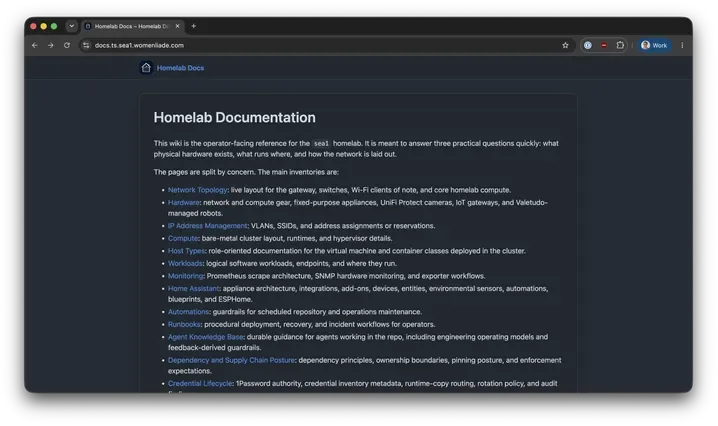
The agent knowledge base carries the durable engineering guidance that does not
belong in AGENTS.md. This structure is the mechanism for progressive
disclosure: AGENTS.md provides the map, and agents load the detailed operating
model only when the task makes it relevant.

Each recurring automation’s task is documented in a Markdown file in the repo.
The automation itself is wired up with a thin prompt—essentially, “you do
<task>; read <doc>”—so the checked-in documentation remains the source of
truth.

Source: Ryan Lopopolo · hyperbo.la